When you think about the heart of your home, chances are the kitchen and dining room come to mind first. It’s where meals are shared, late-night conversations happen over dessert, and holidays are remembered for years to come.
Because of all these things, it’s important that these spaces are functional, but that doesn’t mean you have to sacrifice design!
Your kitchen and dining room can be seamlessly stylish without losing even an ounce of its functionality when you go about it in the right way.
Whether you have an open-concept layout or distinct rooms for cooking and dining, creating cohesion between these two areas can elevate the entire feel of your home.
So, if you’ve been itching to re-design these areas, but you’ve been stumped on how to go about it, this blog post is for you.
Keep reading for 6 interior design ideas for kitchen and dining room spaces that will bring out the best in both, while still making them feel uniquely yours.
6 Interior Design Ideas for Kitchen and Dining Room Spaces
1. Create Visual Flow With Cohesive Materials
One of the simplest ways to tie your kitchen and dining room together is by using complementary materials and finishes.
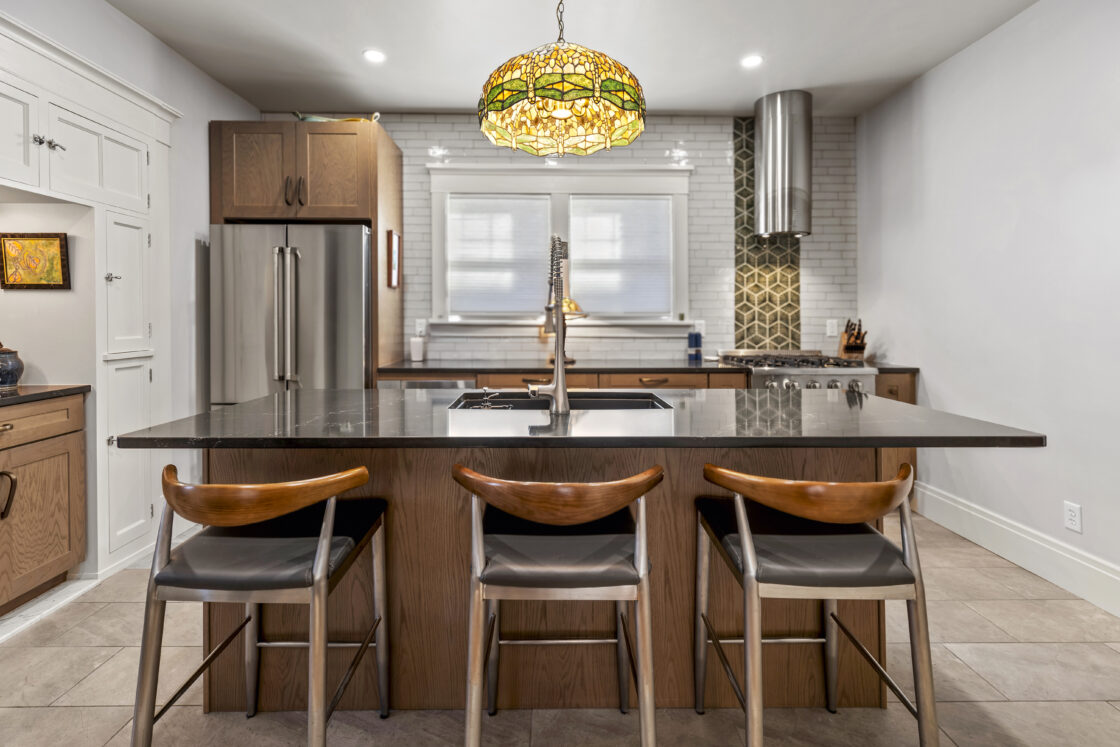
For example, you can use the same wood tone on your dining table and kitchen island, or repeat a metal finish from your kitchen hardware in your dining room light fixture.
This creates a subtle visual connection that makes the two spaces feel harmonious without looking too “matchy-matchy.”
And bonus points if you can carry similar textures, like a soft linen in your dining chairs and roman shade above the kitchen sink, to further that sense of continuity.
2. Play With Lighting to Define Each Zone
Lighting is one of the most impactful elements in any design, and in an open kitchen-dining space, it’s especially powerful. When choosing your lighting for your kitchen and dining room design, opt for statement fixtures to help define the different zones while still keeping the look cohesive.
For example, a sculptural chandelier above the dining table paired with pendant lights over the kitchen island can help anchor both spaces while maintaining a connected aesthetic.
Just make sure the finishes complement each other (even if the shapes or styles are different) to keep things visually balanced!

3. Use Color to Connect (or Contrast!)
Next up, color is a great tool when it comes to designing cohesive spaces!
For example, you can choose one signature hue and use it as an accent throughout both rooms, like sage green cabinets in the kitchen, and coordinating green patterned dining chairs or art in the dining space.
Alternatively, if you want to define the rooms more distinctly, you can use complementary but contrasting colors that still play nicely together.
This might look like a warm ivory kitchen paired with a moody navy dining room that creates a sophisticated contrast while still feeling intentional and connected.
If you’re struggling to choose your kitchen color combos, read here for some inspiration!

4. Incorporate Built-In Storage That Spans Both Spaces
If your layout allows, custom or built-in storage that flows between the kitchen and dining room can be both beautiful and practical. For spaces like this, a built-in buffet can offer extra storage while also serving as a visual bridge between the two spaces.
This is also a great spot to display styled open shelving, favorite serving pieces, or even a small coffee or wine bar, all of which add personality and function all in one.

5. Add Warmth With Natural Elements
No matter your design style, layering in natural elements is always a win, especially in high-traffic, functional areas like kitchens and dining rooms.
When wanting to incorporate natural elements into your design, think wood tones, rattan, stone, greenery, or even hand-thrown ceramics. These textures help soften the space and make it feel more inviting!
You can try woven dining chairs, a reclaimed wood table, or a marble backsplash that’s echoed in a decorative tray on the dining table. These small touches add warmth and interest while helping to make the whole space feel thoughtfully pulled together.

6. Make a Statement With Art or a Feature Wall
Lastly, don’t underestimate the power of a well-placed piece of art (or two) in your kitchen and dining room. It’s a great way to infuse personality and break up the harder, more utilitarian surfaces in a kitchen-heavy area.
If you’re feeling bold, consider a feature wall in the dining room, whether that’s wallpaper, a dramatic paint color, or vertical paneling. It can act as a visual focal point and add depth to the space, especially when paired with a more neutral kitchen palette!

Additional Resources For Your Kitchen and Dining Room Design Needs
Designing a kitchen and dining room that feel like a natural extension of each other doesn’t always require a full gut renovation – it just takes intention and a few strategic choices to achieve the look you’re going for!
Whether you’re reworking your layout or simply updating finishes and furniture, these interior design ideas for kitchen and dining room spaces are a great place to start.
If you’re in search of additional interior design resources to help you with your kitchen and dining room design, you’re in the right place!
Click here to browse the blog for more interior design ideas and inspiration OR if you’re local to Buffalo, NY and are looking to work with an interior designer, click here to view my services to see which best matches your needs.