If you’ve lived in Buffalo for more than one winter, you already know this city does not play around when it comes to weather. Lake-effect snow can bury a driveway overnight, temperatures swing from humid summer afternoons to bone-dry winter heat, and salt-slicked boots track straight through the front door for months at a time.
It’s no secret that all of that takes a toll on a home’s interior, not just the exterior. When homeowners come to me for a renovation, interior design material selection is one of the first conversations we have.
Because the wrong choice doesn’t just look worse over time – it can warp, crack, fade, or need replacing years before it should. The right choice holds its shape, its color, and its finish through every season Buffalo throws at it!
If you’re planning a renovation in your Buffalo home and you aren’t sure which interior design materials are the right choice, this blog post is here to help.
Why Buffalo’s Climate is Tough on Interior Design Materials
Choosing interior design materials isn’t a one size fits all situation and it’s also not something you should decide based on aesthetics alone! Choosing the best interior design materials for the climate you’re in is SUPER important.
Buffalo’s climate creates a handful of specific stressors that a lot of design advice (written for milder climates) simply doesn’t account for, including:
Lake-effect snow and moisture
Lake effect snow is a unique snowstorm that Buffalo is no stranger to! During these weather events, there’s heavy snowfall, narrow bands of intense snow squalls, and dramatic differences in accumulation over short distances and it’s all caused when cold air moves over warmer lake water.
After snow events like this, snow melts off boots, coats, and bags all winter long, meaning entryways, mudrooms, and connecting hallways deal with standing moisture far more than in drier climates.
Freeze-thaw cycles
Buffalo doesn’t just get cold – it swings, meaning materials expand and contract repeatedly as temperatures move from freezing to thawing and back again. This freeze-thaw cycle puts stress on flooring, trim, and anything installed tightly against a wall or subfloor.
Humidity swings between seasons
When people think of Buffalo they immediately think COLD. And while it’s true that our winters can be brutal, our summers here also get surprisingly humid, which plays a big factor in interior design material choices as well.
Humidity swings between seasons – humid summers, then forced-air heat drying interior air out all winter – and materials that don’t tolerate that swing well (like solid wood in particular) can cup, gap, or crack.
Salt exposure
With all of the snow and cold temps, the Buffalo area is used to the roads being covered in salt. And while it definitely helps with the driving conditions, that road salt gets tracked indoors on shoes and boots for months, which can dull finishes and degrade certain flooring and rug materials faster than expected.
UV exposure
Lastly, long summer daylight hours in Buffalo means more direct sun through windows than people expect, which can fade fabrics, rugs, and finishes over time if they aren’t rated for it.
What To Look For When Choosing Interior Design Materials for Your Buffalo Renovation
Before picking specific interior design materials for your Buffalo home renovation, it helps to run every option through the same set of questions:
- How will this material handle moisture?
We’re not just talking spills here, but rather sustained humidity and melted snow tracked in over weeks at a time.
- Can it handle temperature swings without warping or cracking?
This matters most for anything installed near exterior walls, entryways, or windows.
- Will it fade or degrade with UV exposure?
This question is especially relevant for south- and west-facing rooms with a lot of natural light.
- How much maintenance does it realistically need?
A material that performs well only with constant upkeep isn’t practical for most households through a Buffalo winter.
- Where in the home is it going?
An entryway, a sunroom, and a primary bedroom all have very different exposure levels, even within the same house, which means a material that works well in the entryway may not be the best choice for your kitchen!
Once you’ve run an interior design material through these questions, it becomes much clearer which options are worth the investment and which will cause headaches by year three.
Interior Design Materials I’d Pick as a Buffalo, NY Interior Designer
If you’re struggling to choose your interior design materials, I’m here to help! As a Buffalo, NY interior designer, I’ve learned through the years which materials are a yes… and which ones I steer clear of.
Here are some of my top picks:
Flooring
- Engineered hardwood
This is my go-to over solid hardwood in most Buffalo homes because its layered construction resists the expansion and contraction that solid wood struggles with through humidity swings, so it’s far less likely to gap or cup over time.
- Luxury vinyl plank (LVP)
This is an excellent choice for mudrooms, entryways, and basements – basically anywhere moisture and salt exposure are a given. It’s fully waterproof, holds up to heavy foot traffic, and won’t warp from temperature shifts.
- Tile
Tile remains one of the most durable options for entryways specifically, since it shrugs off melting snow, salt residue, and repeated cleaning without any risk of water damage.
Wall and Finishes
- Mildew-resistant paint formulas
These are well worth the upgrade in bathrooms, kitchens, and any room prone to humidity swings because they resist the moisture-related breakdown standard paint can experience.
- Vinyl or specialty wallpaper designed for high-moisture areas
Both of these options can work well in entryways or powder rooms, as long as it’s rated for humidity rather than a purely decorative-grade product.
- Sealed wood paneling or wainscoting
Either of these options can still work beautifully in a Buffalo home, but it needs a proper moisture-resistant sealant to prevent warping near exterior walls or humid rooms.
Fabrics and Upholstery
- Performance fabrics
Originally designed for outdoor or high-traffic commercial use, performance fabrics have become a favorite for Buffalo living rooms and family spaces, since they resist moisture, stains, and general wear from boots-and-coats season.
- UV-resistant or solution-dyed fabrics
These are essential for any furniture placed in a sun-facing room, as they resist the fading that standard fabrics experience after a season or two of direct light.
- Low-pile, moisture-tolerant rugs
These work best near entryways, where snow and salt are tracked in most often because a delicate natural-fiber rug simply won’t hold up in that location.
Windows, Trim, and Doors
- Fiberglass or composite window frames
Both of these options handle Buffalo’s temperature swings far better than solid wood, resisting the warping and sticking that can happen as materials expand and contract through the seasons.
- Composite or engineered trim materials
These kinds of materials hold their shape better than solid wood trim in rooms with fluctuating humidity, particularly near exterior walls.
- Solid-core doors with weather-resistant finishes
These stand up better to the swelling and shrinking that can affect hollow-core or untreated wood doors through a full Buffalo year.
Cabinetry and Countertops
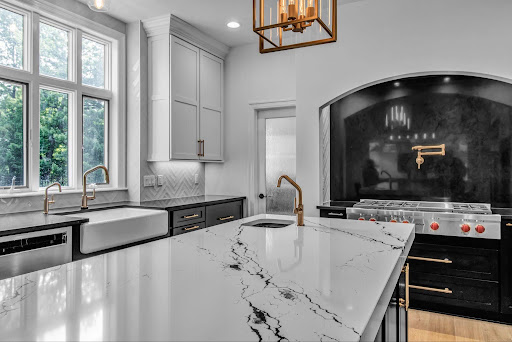
- Quartz countertops
This is one of the most reliable options for Buffalo kitchens as they resist staining, don’t require sealing, and hold up to temperature changes far better than more porous natural stone options.
Want professional help choosing your interior design materials for your Buffalo renovation?
Overall, choosing interior design materials that look beautiful and hold up through a full Buffalo year takes more than a quick trip to a showroom. It takes an understanding of how this specific climate affects specific products, room by room.
So if you’re planning a renovation and have been stuck on what materials to use, you can use this blog post as your guide!
But if it still feels like a struggle for you and you’d rather have a design partner who already knows what works (and what doesn’t) in Buffalo homes, I’d love to help you get it right the first time!
At Kendal Cavalieri Designs, we specialize in kitchen and bathroom renovation and remodeling and would love to help you create a plan that’s made to last.
CLICK HERE to learn more about what it’s like to work with us and when you’re ready to get started, CLICK HERE to inquire.