If you’ve ever lived in or toured an older home in Buffalo, NY, you know the charm is undeniable. There’s often original woodwork, unique layouts, and so much character, but when it comes to the kitchen, that’s often where things can feel a little… outdated (and tight on space).
It’s no secret that older homes weren’t designed with today’s open-concept living in mind, which means kitchens can feel small, closed off, and lacking in functionality. But the good news is that with the right approach, even the smallest kitchen in a Buffalo home can be transformed into a space that feels both beautiful and highly functional.
So if you’re planning a renovation, these small kitchen remodeling tips will help you make the most of your space while still honoring the character of your Buffalo home!
7 Small Kitchen Remodeling Tips for Buffalo, NY Homes
Rethink the Layout First
When you think about remodeling your kitchen, your mind likely jumps straight to the fun stuff, like finishes, colors, and maybe even tile choices.
And while I can agree that stuff is fun, the top priority for any renovation should be the layout, especially when it comes to small kitchens.
In many older Buffalo homes, kitchens were designed with efficiency in mind, not flow, which means your kitchen could be lacking in the way it functions day to day.
So that’s where you want to start! Evaluate whether your current kitchen layout is actually working for you by asking things like:
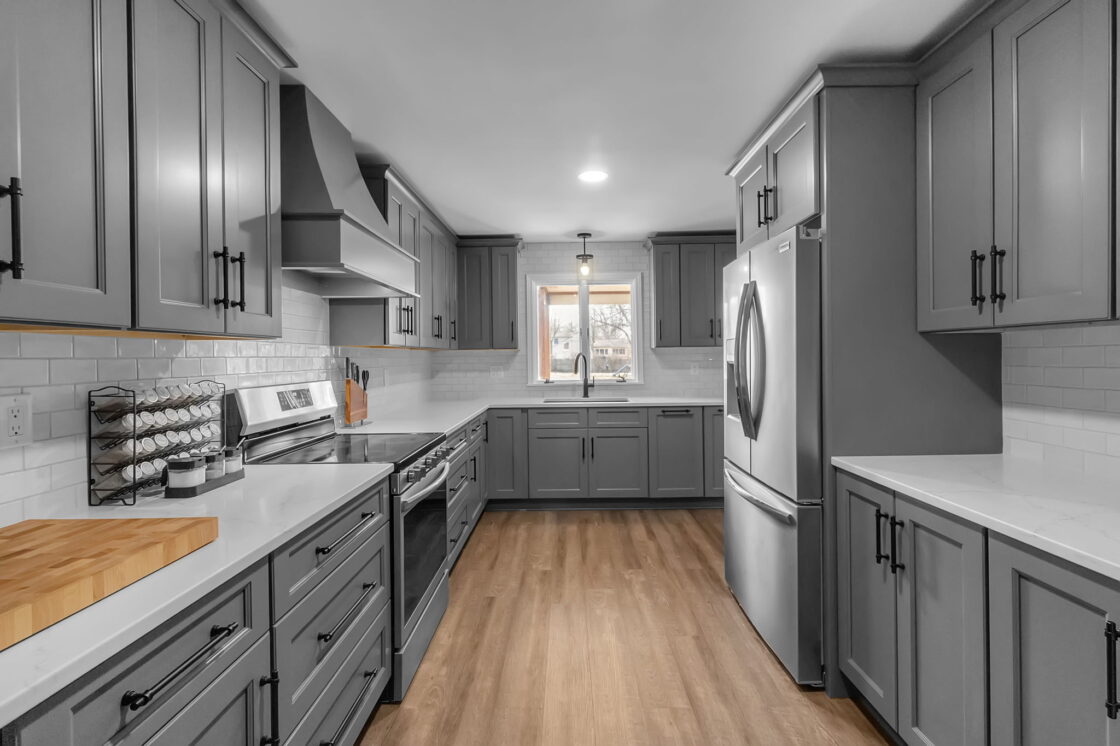
Could a wall be removed to open up the space? Would a galley layout function better than an L-shape? Could you add a small peninsula for extra prep space?
Small kitchen layout adjustments like this can dramatically improve how your kitchen feels and functions!
Maximize Vertical Space
When square footage is limited, you have to think vertically and luckily, many older homes in Buffalo have higher ceilings, which gives you a huge opportunity to add storage without expanding your footprint.
This is where you can get creative! For example, you might install cabinetry that extends all the way to the ceiling, add open shelving for everyday items, or incorporate vertical storage solutions like tray dividers or tall pantry cabinets.
Not only does this create more storage, but it also draws the eye upward, making the kitchen feel larger and more open.
Choose Light, Warm Finishes
Lighting plays a huge role in how spacious your kitchen feels, especially in older homes where natural light can sometimes be limited.
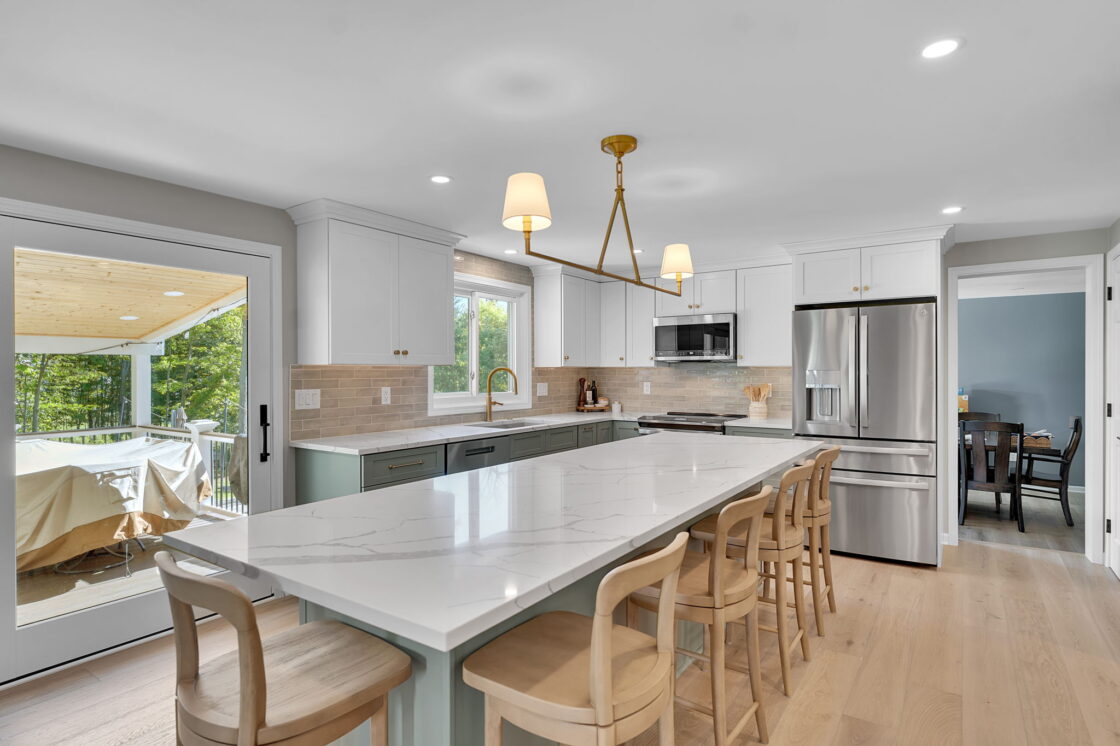
That’s why one of my favorite small kitchen remodeling tips is opting for lighter, warmer finishes like soft whites, warm wood tones, and creamy neutrals to brighten the space.
And no, this doesn’t mean your kitchen has to feel boring! Layering textures (like wood, stone, and tile) can keep things visually interesting while still maintaining an open feel.
Add Reflective Surfaces to Open the Space
In addition to choosing proper lighting, if your kitchen feels closed in, incorporating reflective elements can also help visually expand the space.
For example, you might consider glossy tile backsplashes, polished countertops, glass-front cabinetry, or even subtle metallic accents. These materials reflect light throughout the room, making it feel brighter and more open.
In smaller Buffalo kitchens (especially those without large windows), this simple design choice can make a noticeable difference.
Incorporate Smart, Built-In Storage
Storage is everything in a small kitchen and this is where thoughtful design makes all the difference. Instead of relying on standard cabinets alone, consider built-in solutions that maximize every inch of space.
Think pull-out pantry cabinets, corner storage systems, drawer organizers, and even toe-kick drawers beneath lower cabinets – this is one of my favorite ways to get creative with client projects!
Older kitchens often have awkward nooks or underutilized areas, and custom storage solutions can turn those “dead spaces” into highly functional features.
Scale Your Fixtures and Appliances
In a small kitchen, scale matters more than you might think. Oversized appliances or bulky fixtures can quickly overwhelm the space and make it feel even smaller.
When remodeling your small kitchen, look for slimmer appliances, streamlined range hoods, and fixtures that feel proportionate to the size of your kitchen. This doesn’t mean sacrificing functionality, it just means choosing pieces that fit the space thoughtfully.
This is one of those small kitchen remodeling tips that often gets overlooked, but it can have a huge impact on both the look and usability of your kitchen!
Blend Modern Function With Original Character
Lastly, one of the biggest mistakes homeowners make when remodeling older kitchens is stripping away all of the home’s original charm.
Instead, aim to strike a balance between modern functionality and timeless character. To achieve this, I typically suggest keeping elements like original trim, architectural details, or even vintage-inspired finishes, and pair them with updated cabinetry, lighting, and layouts.
This approach not only preserves the personality of your Buffalo home but also creates a kitchen that feels unique and thoughtfully designed instead of feeling like it could belong anywhere.
Interior Kitchen Designer in Buffalo, NY
Overall, remodeling a kitchen in an older Buffalo home comes with its own set of challenges, but it also offers an incredible opportunity to create something truly special.
If you’re feeling unsure about where to start, working with an interior designer who understands Buffalo homes (hey, that’s me!) can help you see possibilities you may not have considered on your own, especially when it comes to reworking layouts and maximizing every inch of space!
If you’re interested in working together, you can CLICK HERE to view my kitchen design services or reach out directly.
If you’re simply in search of additional kitchen design resources, I’ve got you covered there too: